Built by farmers, engineers and agribusiness professionals.
Founded in 2021, Wobil Technologies designs, manufactures and deploys hybrid solar-powered agricultural technologies that reduce post-harvest losses and create green economic opportunity in rural Ghana.
Our mission
To design and deploy affordable, locally manufactured clean-energy technologies that let smallholder farmers increase productivity, reduce losses and improve livelihoods.
Our vision
To become Africa's leading provider of climate-smart agricultural mechanization, strengthening food security, climate resilience and opportunity for women and youth.
From a wooden prototype to commercial-ready.
Wobil began after our founder watched rice farmers lose much of their harvest to slow, inefficient threshing and manual grain cleaning, and watched women carry heavy bowls of grain, recovering by hand what traditional methods spilled.
Through continuous field testing and farmer engagement, that early wooden prototype became a patent-pending multi-stage hybrid solar-powered threshing system, designed specifically for African conditions.
Between 2021 and 2025, Wobil grew from prototype to proven impact, serving hundreds of farmers, processing nearly a thousand tonnes of rice, and creating dignified green jobs along the way.
Climate-smart agriculture means farming in a way that raises productivity and incomes while adapting to a changing climate and cutting emissions. For us, that’s practical: our machines run on hybrid solar power instead of diesel, they slash the grain lost after harvest, and they help farmers get more value from every crop, using fewer resources and leaving a lighter footprint on the environment.
The four driving it forward.
A multidisciplinary team with deep, firsthand roots in farming, fabrication and agribusiness.
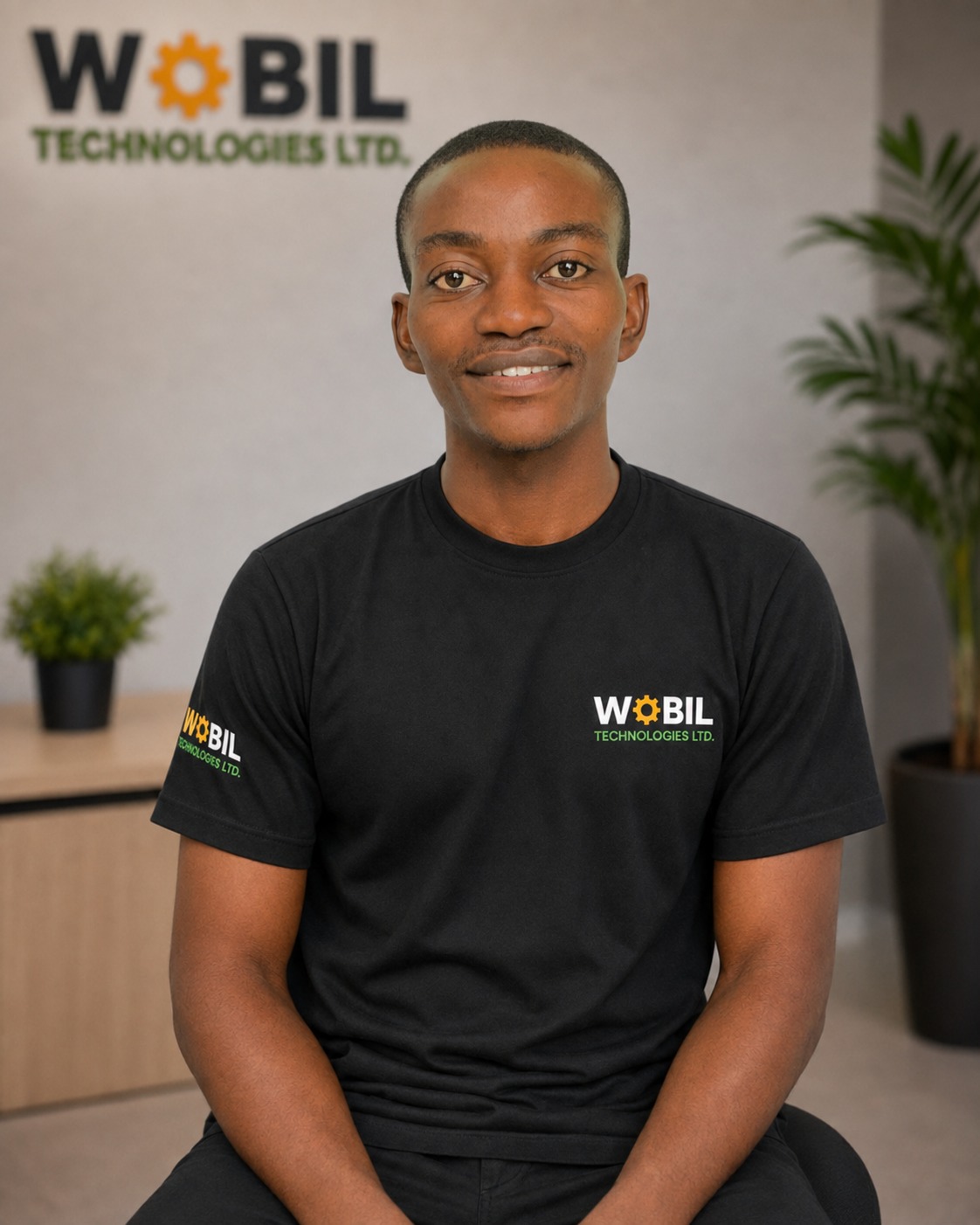
Electrical engineer, inventor and rice farmer with 12+ years in agricultural machinery. He led development of the patent-pending multi-stage thresher and oversees engineering and manufacturing.
Five principles guide every decision.
Transparent reporting on financial, operational and impact outcomes.
Continuously improving technology and models for evolving climate challenges.
Meaningful participation of women, youth and underserved farmers.
Balancing commercial viability with environmental stewardship.
Leveraging research, government and farmer-group partnerships.
Want to know where we're headed?
We're scaling toward 10,000 farmers by 2028. Reach out, Wobil is always glad to talk.